
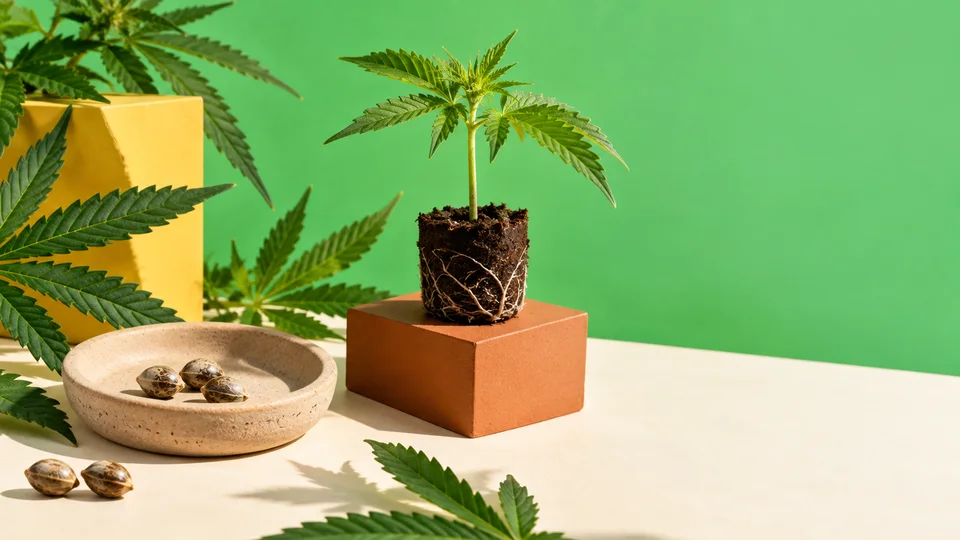
A clone is a copy of one plant. A seed is a new individual. What that difference means for consistency, health and choice.
Cannabis can be started in two ways. A seed is the offspring of two parents and grows into a new individual. A clone is a cutting taken from an existing plant and grows into a copy of it. Each method has strengths the other lacks, and understanding them explains a good deal of what you read on a seed page.
In short
- Seeds: variation between plants, a clean start, strong roots, thousands of strains, easy to store and ship.
- Clones: identical plants, known results, a head start of a few weeks, and whatever health problems the mother had.
- Autoflowers exist only as seeds.
- Many growers combine the two: start from seed, then keep the best plant as cuttings.
Side by side
| Seeds | Clones | |
|---|---|---|
| Genetics | Each plant is a new individual | Identical to the mother |
| Consistency between plants | Varies with how stable the line is | Complete |
| Sex | Certain with feminized seeds. Half male with regular | Same as the mother |
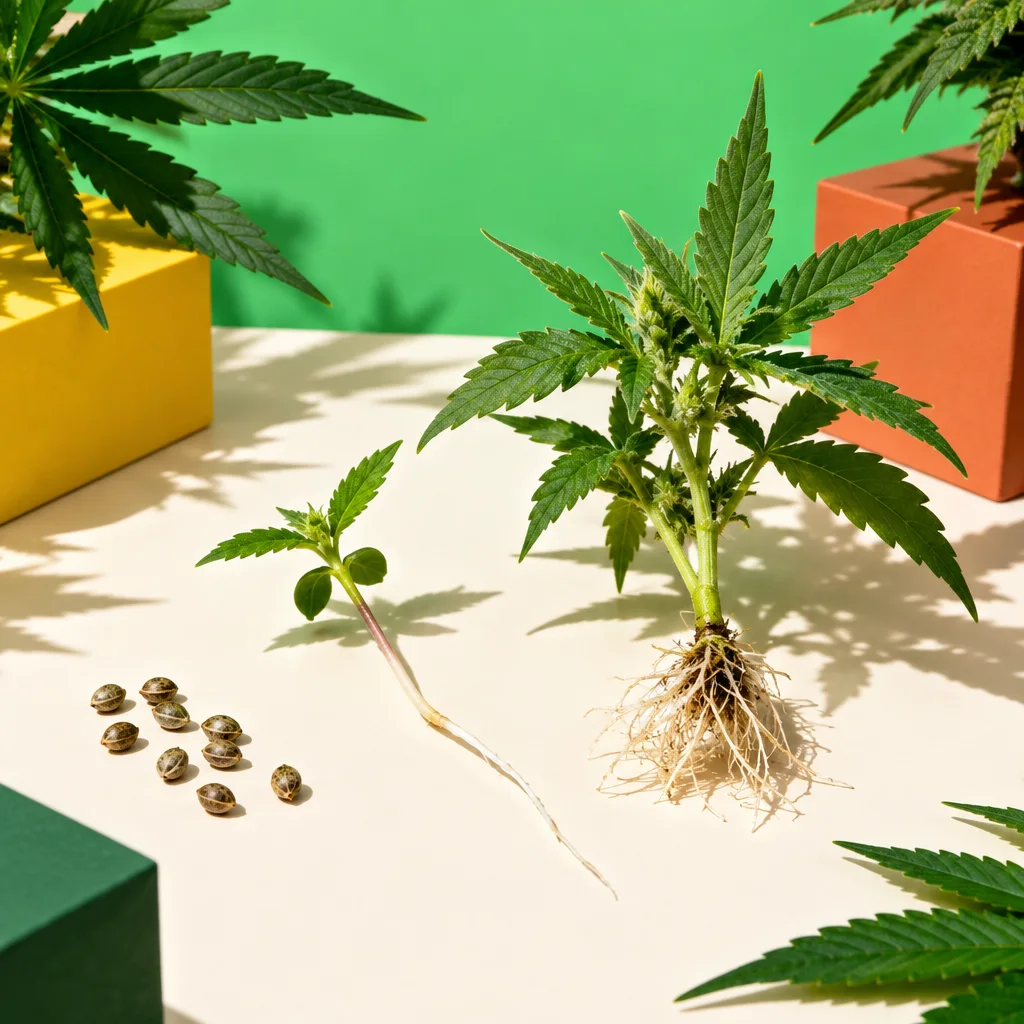
| Roots | A taproot plus side roots | Side roots only |
| Early vigor | Usually strong | Depends on the mother's health |
| Pests and disease | Start clean | Can carry everything the mother had |
| Time to a plant ready for flowering | 4 to 6 weeks from sprouting | 2 to 4 weeks from a rooted cutting |
| Choice | Thousands of strains | Whatever is available as a living plant |
| Storage | Years, cool and dry | None. A clone must be kept alive |
| Autoflowers | Yes | No |
What a seed gives you
A fresh start. A seed carries almost none of the pests and diseases its parents had. For a grow space, that is worth a lot. Many problems that plague indoor growers arrive on cuttings.
A taproot. A seedling sends one main root straight down before branching. Outdoors in open ground, that helps the plant anchor itself and reach water. In pots the advantage is smaller.
Choice. Seeds are small, dormant and easy to send, so you can choose from the work of breeders anywhere, and compare versions, prices and shops.
Variation. Depending on your aim, that is a drawback or the whole point. Ten seeds of a new cross give ten somewhat different plants, and one of them may be exceptional.
Time on your side. Seeds wait for years in a cool, dry place until you are ready.
What a clone gives you
Certainty. You know what the plant will do, because you, or someone, already grew it. Height, flowering time, flavor: all as before.
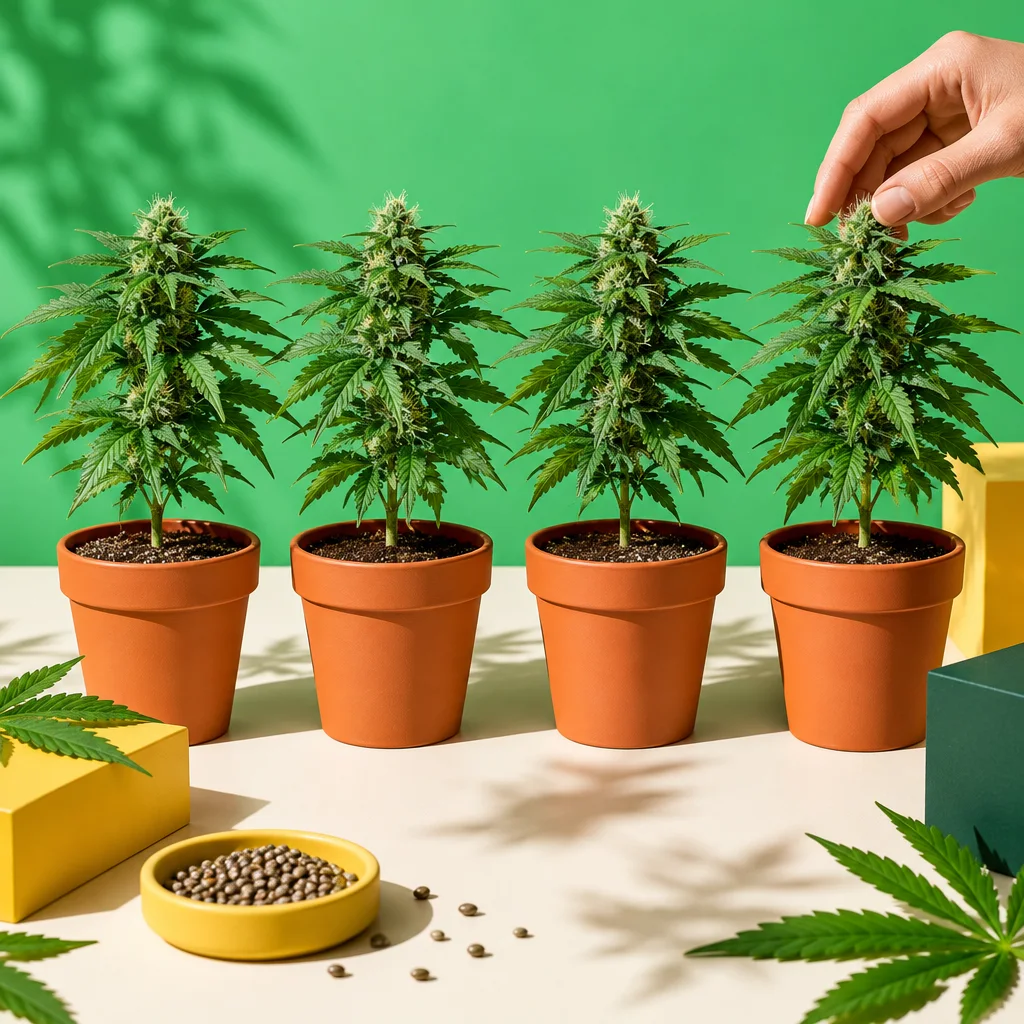
Uniformity. Four cuttings from one mother fill a tent with four identical plants. That makes training, feeding and harvest timing simple.
A head start. A rooted cutting is past the seedling stage and is already mature, so it can be flowered as soon as it is large enough.
Access to clone-only plants. Some famous strains exist as one specific plant that was never reproduced as a true-breeding seed line.
What a clone costs you
Health risks. Mites, mildew and plant diseases travel on cuttings. A single infected cutting can bring a problem into a clean room that takes months to remove.
No variation. If the mother has a weakness, such as susceptibility to mold, every copy has it.
Upkeep. To have cuttings when you want them, you keep a mother plant under light all year.
Seeds are getting closer to clones
The main argument for clones has always been consistency. Breeders have narrowed that gap from the seed side:
- Stabilized lines and inbred lines give plants that vary little.
- True F1 hybrids, made from two inbred parent lines, give plants that are nearly identical from seed.
- Selfed lines and backcrosses of famous clone-only plants bring their character into seed form, with some variation.
None of these is a perfect copy. For most home grows they are close enough, with the clean start of a seed.
Which for which grower
| You are | Start from |
|---|---|
| On a first grow | Seeds. A clean start and simple logistics |
| Growing autoflowers | Seeds. There is no other way |
| Growing outdoors in the ground | Seeds, for the taproot and vigor |
| Trying new strains each run | Seeds |
| Running the same plant again and again | Cuttings from your own selected mother |
| Wanting a perfectly even canopy | Cuttings, or a true F1 hybrid from seed |
| Looking for one exceptional plant | Seeds, in a larger pack, then keep the winner as cuttings |
The combined approach
Most experienced growers end up here:
- Start a pack of photoperiod seeds.
- Take a labeled cutting from each plant before flowering.
- Flower the seed plants and judge them after the cure.
- Keep the cutting of the best plant as a mother.
- Grow from her cuttings until you want something new, then return to step one.
You get the choice and the clean start of seeds, and the consistency of clones, without ever bringing someone else's plant into your space. Our guide to mother plants and cuttings goes through the method.
How this shows up on a seed page
- Variation between plants is why breeders describe lines as stabilized, F1, S1 or BX. Those terms tell you how close to clone-like uniformity a pack comes.
- Clone-only origins are why versions of strains such as OG Kush or Gelato differ so much between breeders. Each made their own seed line from a cutting.
- Autoflower versions depend entirely on the consistency of the seed line, since no grower can keep a good one.
On Seedsbay
Seedsbay compares seeds: the same breeder's pack across shops, and different breeders' versions of the same strain side by side. Where a strain began as a clone-only plant, the lineage on the strain page and the breeder's description on the shop's page tell you how each seed version was made.
Frequently asked questions
Is a clone better than a seed?
Neither is better. A clone gives you a known plant again. A seed gives you a healthy fresh start and far more choice.
Do clones yield less than plants from seed?
Not noticeably when both are healthy. Seed plants have a taproot and often a little more vigor early on.
Can a clone carry disease?
Yes. Pests, mildew and plant diseases travel with cuttings. Seeds start clean.
Is there a clone of an autoflower?
No. Autoflowers flower by age, so a cutting flowers at once. They are grown from seed only.
Are clone-only strains available as seeds?
Not as the original plant. Seeds sold under the name are crosses or selfed lines made with it, and resemble it to varying degrees.
What is the best of both?
Start from seed, select your best plant, and keep it going as cuttings.
Next step
Decide what you want from your next run: something new, or the same again. If it is something new, compare seed versions. If it is the same again, take cuttings this time before you flower.
Ready to compare prices?
Compare every seed type by price per seed across seedshops.