
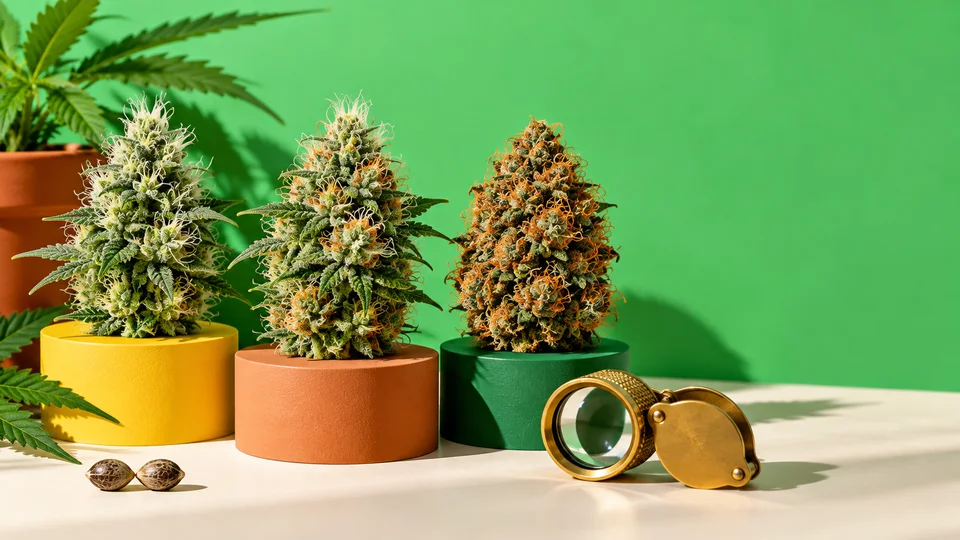
The date on the pack tells you when to start looking. The plant tells you when it is ready, in three signs you can learn in a week.
No number on a seed pack can tell you the day to harvest. The listed flowering time is a best case for the fastest plants, and your room, your seeds and your taste all move the date. The plant itself gives three signs, and with a small magnifier you can read them reliably after a week of practice.
In short
- Start checking when the listed flowering time is reached. Expect to wait one to two weeks more.
- Three signs, in order of reliability: resin glands, flower shape, hairs.
- Milky resin glands mean peak potency. A share of amber means a heavier result.
- Harvesting too early is the most common way to lose weight and strength.
Sign one: the hairs
Each flower pushes out white hairs, called pistils. As the flower ripens, they darken to orange or brown and curl inward.
| Hairs darkened | Stage |
|---|---|
| Under half | Not close |
| Half to two thirds | Getting close: start checking the resin glands |
| Three quarters or more | Likely in the harvest window |
Hairs are the easiest sign to see and the least reliable. Some strains keep white hairs to the end, and heat or strong light can make a ripe flower throw out fresh ones.
Sign two: the flower shape
In the last two weeks the small pods that make up the flower swell and the whole cola firms up. A flower that is still slim and spiky with long straight hairs is not done, whatever the calendar says. Fan leaves often yellow at this stage as the plant uses up its reserves. That is normal.
Sign three: the resin glands
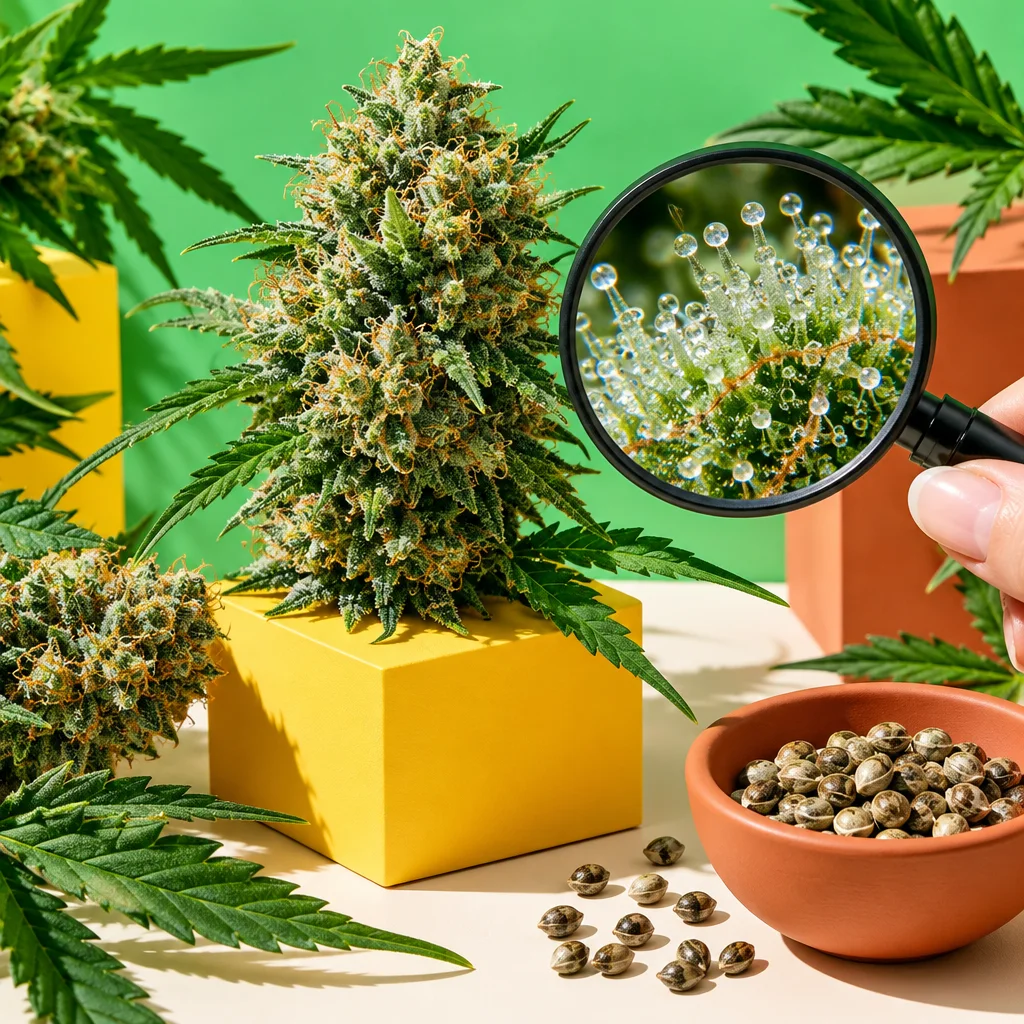
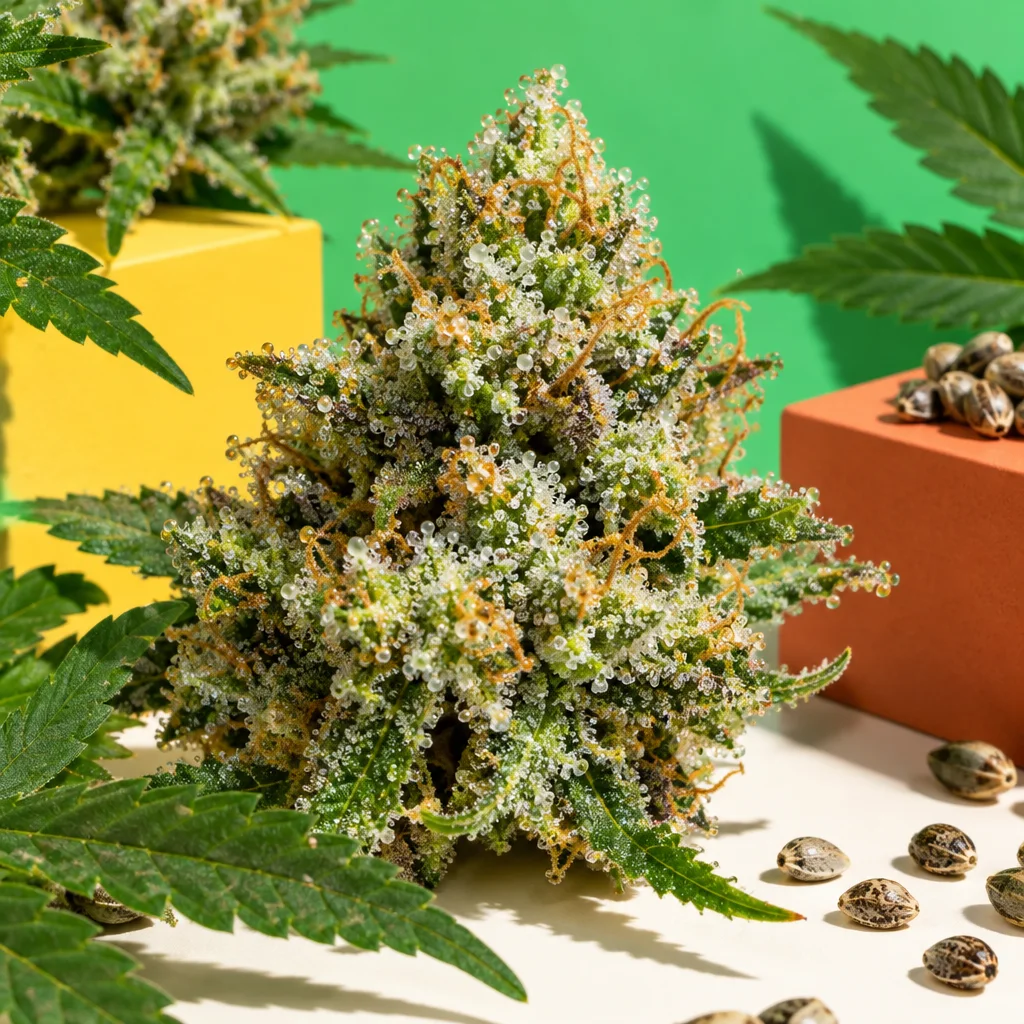
This is the one to trust. Resin glands, or trichomes, look like tiny mushrooms: a stalk with a round head. The head changes color as it ripens.
| Resin heads | What it means | What growers commonly report |
|---|---|---|
| Mostly clear | Too early | Weaker, thinner result |
| Mostly milky, few clear | Peak potency | A brighter, more energetic result |
| Milky with 10 to 30% amber | Fully ripe | A heavier, more relaxing result |
| Mostly amber | Past peak | Sleepy, with reduced potency |
Most growers harvest somewhere in the second or third row. Which one is a matter of taste, and it is the one decision in the grow that is entirely yours.
How to look
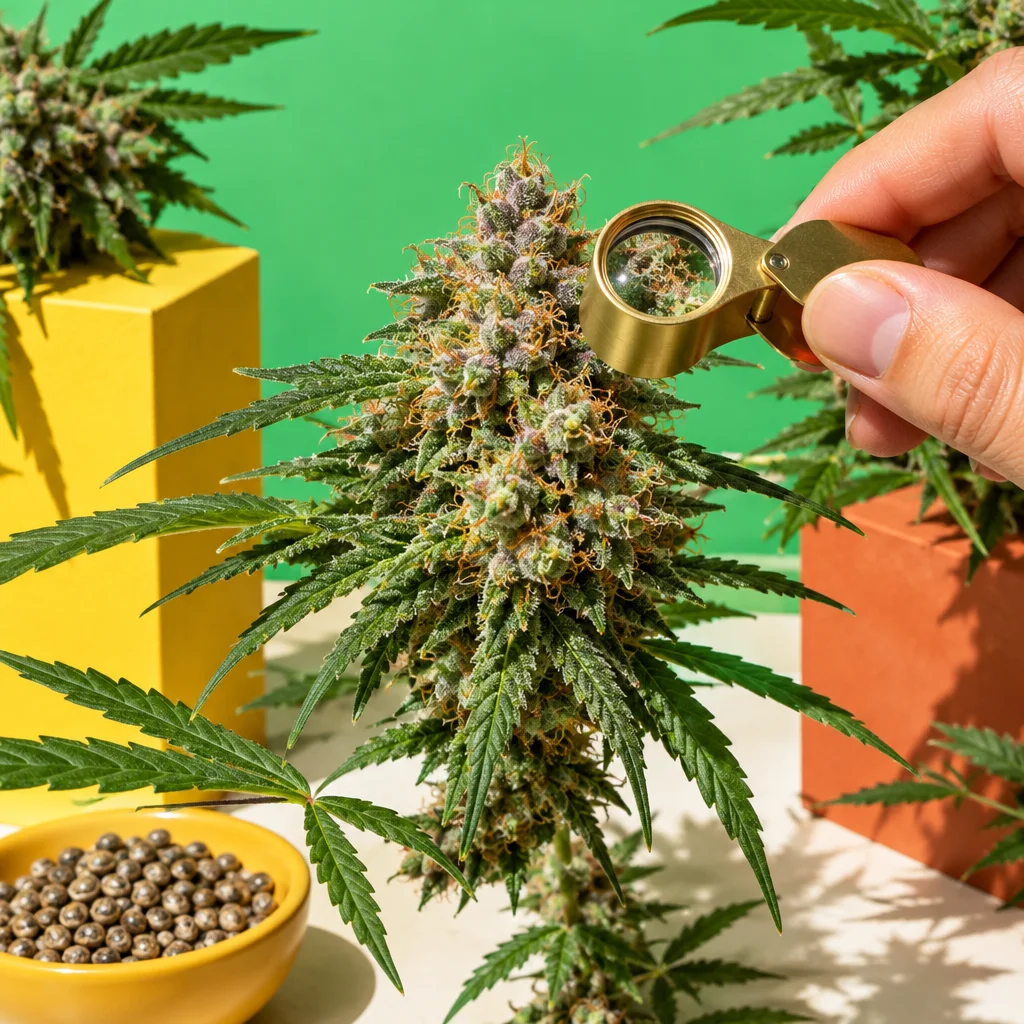
- Tool. A 30x to 60x jeweler's loupe, or a phone with a clip-on macro lens. A photo you can zoom in on is easier than squinting.
- Where. On the flowers themselves, not on the small leaves that stick out of them. Leaf glands turn amber days earlier.
- How many. Check several flowers: the top cola, a side branch and a lower one. They ripen at different speeds.
- Light. Good white light. Under some grow lamps everything looks amber.
- How often. Every two days once the hairs are half darkened. The change from milky to amber takes about a week or two.
Uneven ripening
The top of the plant gets the most light and ripens first. On a large plant the lower branches can be a week behind.
You do not have to choose one day. Cut the ripe tops, leave the rest under the light, and harvest the lower flowers a week later. With the tops gone, light reaches them directly and they finish properly.
By seed type
Autoflowers. The seed-to-harvest figure is the roughest of all breeder numbers. Go entirely by the plant. Autoflowers often look finished a week before the resin glands agree.
Feminized and regular. Add one week to the listed flowering time for indica-leaning strains and two for sativa-leaning ones before you expect ripeness. Long-flowering Haze lines can seem to stall for weeks and then finish quickly.
Outdoors. Weather joins the decision. If a week of cold rain is forecast and the resin is mostly milky, harvesting slightly early beats losing flowers to rot.
The last days
- Watering. Many growers give only plain water in the final one to two weeks. Evidence that it changes the result is thin, but it does no harm.
- Humidity. Keep it at 40 to 50%. Ripe flowers are at their most vulnerable to mold.
- Time of day. Harvest at the end of the dark period, before the lights come on or early in the morning outdoors, when the plant is cool.
- Be ready. Have the drying space set up before you cut. What happens in the next two weeks matters as much as the timing.
Common mistakes
| Mistake | What it costs |
|---|---|
| Harvesting on the listed date | Weight and potency |
| Going by the hairs alone | Often a week too early |
| Checking only the top cola | Unripe lower flowers |
| Judging resin glands on the small leaves | A harvest that is earlier than you think |
| Waiting for every head to turn amber | Reduced potency and a sleepy result |
Frequently asked questions
Can I harvest by the breeder's flowering time alone?
No. It tells you when to start checking. Most plants need one to two weeks more than the listed time.
What magnification do I need to see resin glands?
A 30x to 60x jeweler's loupe is enough. A phone camera with a clip-on macro lens also works.
Should I look at the sugar leaves or the flowers?
The flowers. Resin glands on the small leaves turn amber earlier and make the plant look riper than it is.
What if the top is ripe and the lower flowers are not?
Harvest in stages. Cut the ripe tops and give the lower branches another week under the light.
My plant keeps making new white hairs. Is it not ready?
Look at the resin glands. Heat or strong light can push out fresh hairs on a ripe flower, so hairs alone can mislead.
Does harvesting later increase the yield?
Up to ripeness, yes. Flowers gain weight in the last two weeks. Past ripeness the weight stays the same and potency starts to fall.
Next step
Get a loupe before week six of flowering and look at the resin glands every few days, well before harvest. Seeing them clear makes it obvious later when they have turned. When you choose seeds for the next run, compare each breeder's flowering time on the seed page and plan to start looking from the longest one.
Ready to compare prices?
Compare every seed type by price per seed across seedshops.