
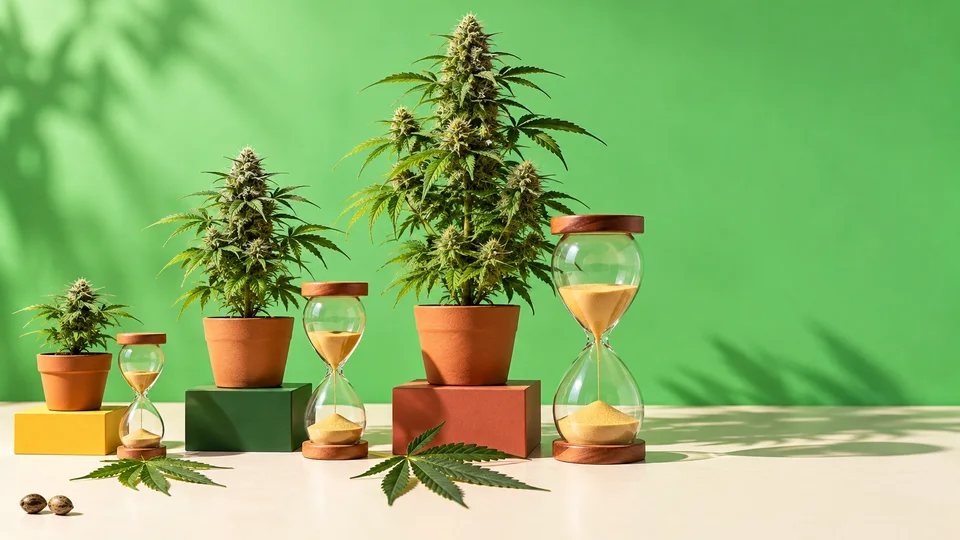
From seed to jar takes 13 to 23 weeks, depending on what you plant. Full timelines by seed type, and the weeks you cannot be away.
"How long does it take?" has two honest answers. From seed to harvest, an indoor grow takes 10 to 20 weeks. From seed to a jar you would want to open, add another three or four. The spread comes almost entirely from what you plant, so the timeline is something you choose along with the seeds.
In short
- Autoflowers: about 13 to 17 weeks from seed to jar.
- Photoperiod plants: about 16 to 23 weeks, depending on strain and growth phase.
- Breeder figures cover only part of the timeline, and the fast end of it.
- A few weeks in every grow need you present. Plan holidays around them.
The phases
| Phase | Autoflower | Photoperiod |
|---|---|---|
| Germination | Up to 1 week | Up to 1 week |
| Seedling and growth | Included in seed to harvest | 4 to 6 weeks, or as long as you choose |
| Flowering | Included in seed to harvest | As listed, plus 1 to 2 weeks |
| Seed to harvest in total | As listed, plus about 1 week | Growth plus flowering |
| Drying | 1 to 2 weeks | 1 to 2 weeks |
| Curing, minimum | 2 weeks | 2 weeks |
Full timelines
| What you plant | Listed figure | Seed to harvest | Seed to jar |
|---|---|---|---|
| Fast autoflower | 9 weeks seed to harvest | 10 to 11 weeks | 13 to 15 weeks |
| Standard autoflower | 11 weeks seed to harvest | 12 to 13 weeks | 15 to 17 weeks |
| Fast photoperiod strain | 8 weeks of flowering, 4 of growth | 13 to 14 weeks | 16 to 18 weeks |
| Typical hybrid | 9 to 10 weeks of flowering, 5 of growth | 16 to 17 weeks | 19 to 21 weeks |
| Haze | 12 weeks of flowering, 4 of growth | 18 to 19 weeks | 21 to 23 weeks |
"Seed to jar" includes drying and two weeks of curing. Flavor keeps improving for several weeks after that.

Planning backward from a date
If you want jars ready by a certain date, count back.
- Take the seed-to-jar figure for your kind of plant.
- Add two weeks of margin. Plants, and growers, run late.
- Count back from your date. That is when the seeds go into water.
A typical hybrid meant to be ready at the end of December goes into water in late July. A fast autoflower for the same date can wait until early September.
Order seeds a few weeks before that. Delivery takes anything from days to three weeks depending on where the shop ships from.
The weeks that need you
A grow is not equally demanding throughout. Some weeks run themselves. Others cannot be delegated.
| When | Why you need to be there |
|---|---|
| Germination and the first two weeks | Seedlings fail quickly from too much water or too little |
| Transplanting, for photoperiod plants | A day's work that cannot be postponed long |
| The switch to 12-12 and the two weeks after | Stretch, training and support all happen now |
| Weeks two to four of flowering | Checking for pollen sacs |
| The harvest window | Ripeness arrives within about a week and does not wait |
| The first week of drying | Daily checks. Mold or overdrying happens fast |
| The first two weeks of curing | Jars need opening every day |
The forgiving stretches are the middle of the growth phase and weeks five to seven of flowering. With a timer on the light and a simple watering system, a healthy plant manages a week alone in either.
When you plan a grow, lay this table over your own calendar before you start the seeds.
How to make a grow shorter
- Choose an autoflower. The shortest route overall.
- Choose a fast-flowering photoperiod strain or a fast version. Seven to eight weeks of flowering instead of ten.
- Shorten the growth phase and run more plants. Nine small plants fill a space in three weeks that four plants fill in five.
- Keep conditions steady. Cold rooms and early stress add weeks.
What does not work: harvesting early. A week saved at the end costs more weight and quality than any other shortcut.
Runs per year
One tent, one week between runs:
| What you grow | Cycle from seed to harvest | Runs per year |
|---|---|---|
| Fast autoflowers | About 11 weeks | 4 to 5 |
| Standard autoflowers | About 13 weeks | About 4 |
| Fast photoperiod strains | About 14 weeks | 3 to 4 |
| Typical hybrids | About 17 weeks | About 3 |
| Haze | About 19 weeks | 2 to 3 |
Drying and curing happen outside this cycle if you have a separate drying space. If you dry in the tent, add two weeks to each run.
A second small space
The biggest gain in runs per year comes from starting the next plants before the current ones finish.
A small second space with a modest light holds seedlings and young plants on 18 hours of light while the main tent flowers. On harvest day they move across. The growth phase no longer occupies the main tent, and a typical hybrid turns over every 11 to 12 weeks instead of every 17.
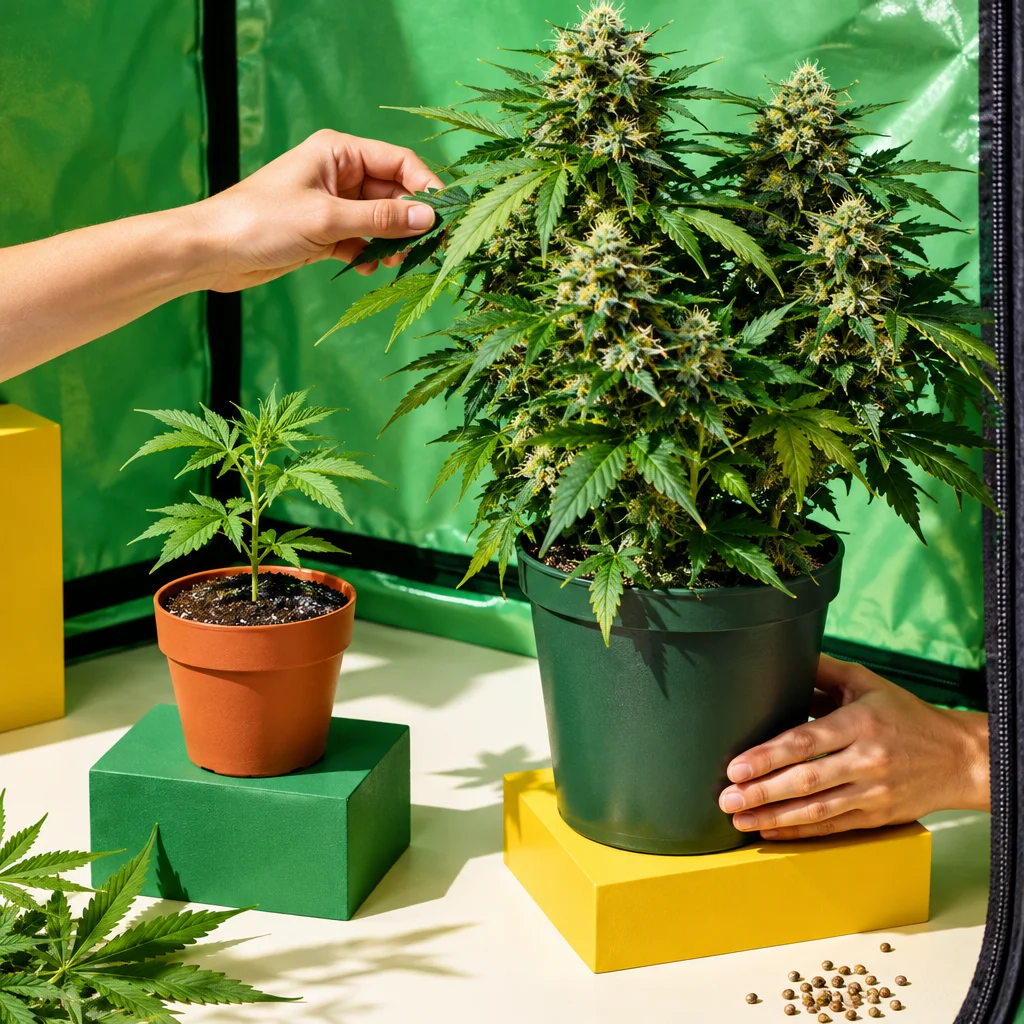
This only works with photoperiod plants, since the two spaces run different light schedules. Autoflowers can simply be started in the main tent a few weeks before harvest, as they do not mind the 12-12 light, though they grow more slowly under it.
Outdoors
Outdoors the calendar is set by the sun, not by you. Photoperiod plants are sown in spring and harvested in autumn, a season of five to seven months. Autoflowers take about ten weeks from sprouting at any time in the warm season. Our guide to the outdoor calendar goes through it month by month for both hemispheres.
On Seedsbay
The figures you need for a timeline are on the seed page: flowering time for feminized and regular seeds, seed to harvest for autoflowers, each shown per breeder. Use the longest figure among the breeders you trust, add the margins above, and you have a plan that holds.
Frequently asked questions
How long from seed to harvest indoors?
About 10 to 12 weeks for autoflowers and 13 to 20 weeks for photoperiod plants, depending on the strain and the length of the growth phase.
How long until I can use the harvest?
Add three to four weeks after harvest: one to two for drying and at least two for curing.
What is the fastest way from seed to jar?
A fast autoflower: about 13 weeks including drying and a short cure.
Can I shorten the growth phase?
For photoperiod plants, yes. A shorter growth phase gives smaller plants, so you grow more of them to fill the space.
Which weeks can I be away?
The middle of the growth phase and the middle of flowering are the most forgiving, with automated watering. The seedling weeks, the harvest window and the first week of drying need you there.
How many harvests per year are realistic?
Three to four with photoperiod plants in one tent. Four to five with autoflowers. More with a second small space for young plants.
Next step
Pick the date you want your jars ready. Count back with the table for the kind of plant you want, mark the weeks that need you, and see whether they fit your year. Then open the seed catalog, choose the seed type that fits that calendar, and compare the breeders' flowering or seed-to-harvest figures on the seed page.
Ready to compare prices?
Compare every seed type by price per seed across seedshops.