
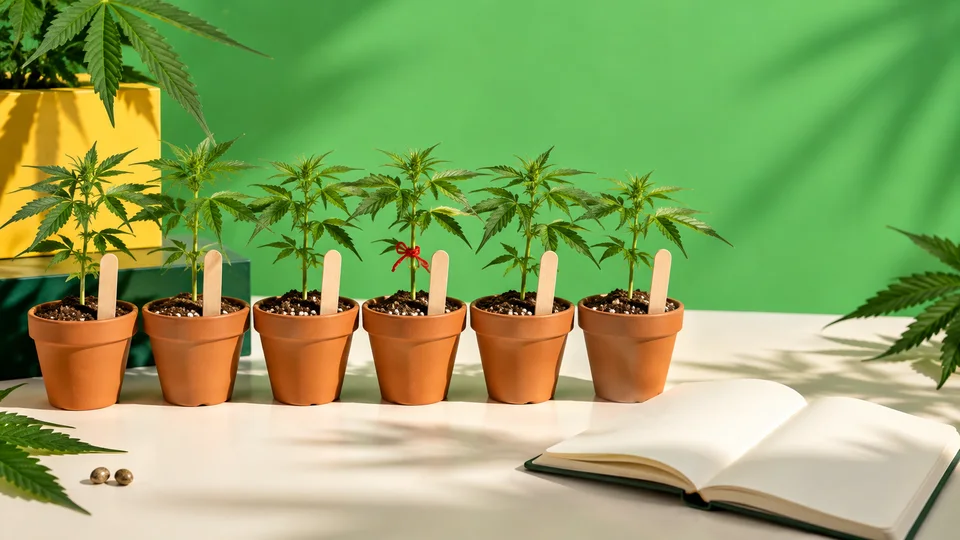
Every pack holds a range of plants. A pheno hunt is the method for finding the best one and being able to grow it again.
A strain name describes a family. Open a pack and you get its members: one taller, one faster, one that smells of lemon where the others smell of fuel. Most growers plant them, harvest them and move on. A pheno hunt is the decision to pay attention instead: to grow the pack out side by side, record how each plant does, and keep the best one alive.
In short
- A pheno hunt compares all plants from a pack and keeps the best as a mother.
- It works with photoperiod seeds, because the winner has to be kept as a cutting.
- Take a labeled cutting from every plant before flowering. That is the step people skip and regret.
- Judge after the cure, by notes, not memory.
What you need
| Minimum | Better | |
|---|---|---|
| Seeds | 10 of one strain | 20 or more |
| Space for flowering | Room for the plants in small pots | The same, with identical pots and positions |
| A second small space | For the cuttings, under 18 hours of light | With room to hold them for three months |
| Labels | One per plant and per cutting | Waterproof, numbered |
| A notebook | One page per plant | A simple table |
| Time | One full run plus the cure | A second run to confirm |
The second space is the real requirement. Cuttings must stay in growth while their seed plants flower, so they cannot share a light.
Which seeds to hunt in
| Seed line | Variation | Good for a hunt? |
|---|---|---|
| Inbred lines and true F1 hybrids | Very low | Poor. The plants are meant to be alike |
| Stabilized older strains | Low | Fair. Differences are subtle |
| New crosses of two hybrid parents | Moderate to high | Good |
| F2 generations | High | Very good |
| Landrace and heirloom lines | High | Very good, with patience |
For once, variation is what you want. A breeder who describes a line as offering "several phenotypes" is telling you it is hunting ground.
The method
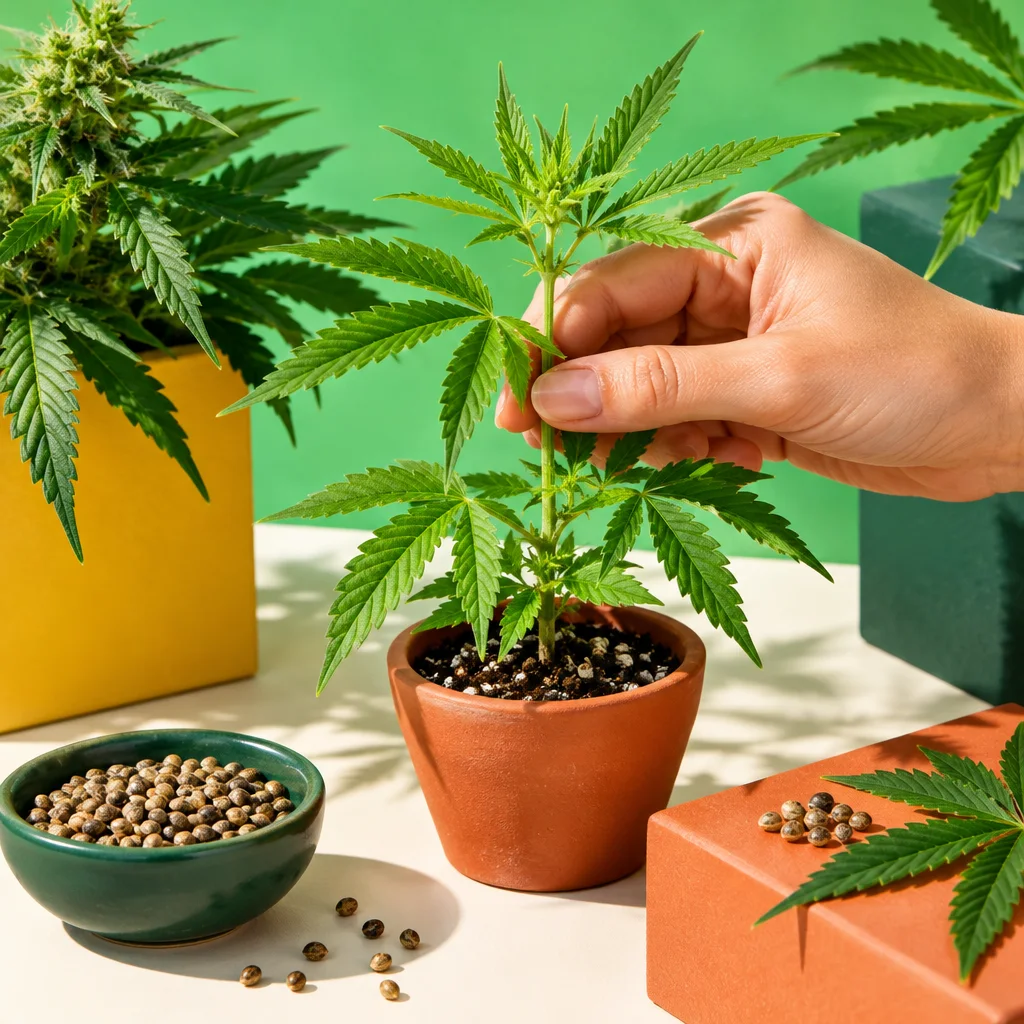
- Start all seeds together, in identical pots, and number them. The number stays with the plant to the jar.
- Treat them the same. Same soil, same feeding, same light. Otherwise you compare your gardening, not the genetics.
- Rotate positions weekly, so no plant sits in the best spot throughout.
- Take one or two cuttings from each plant a week before the switch. Label them with the plant's number.
- With regular seeds, remove the males once they show, unless you are also selecting a male.
- Flower the seed plants. Root the cuttings and keep them small under 18 hours of light.
- Record. See the next section.
- Harvest each plant when it is ripe, not all on one day. The date is data.
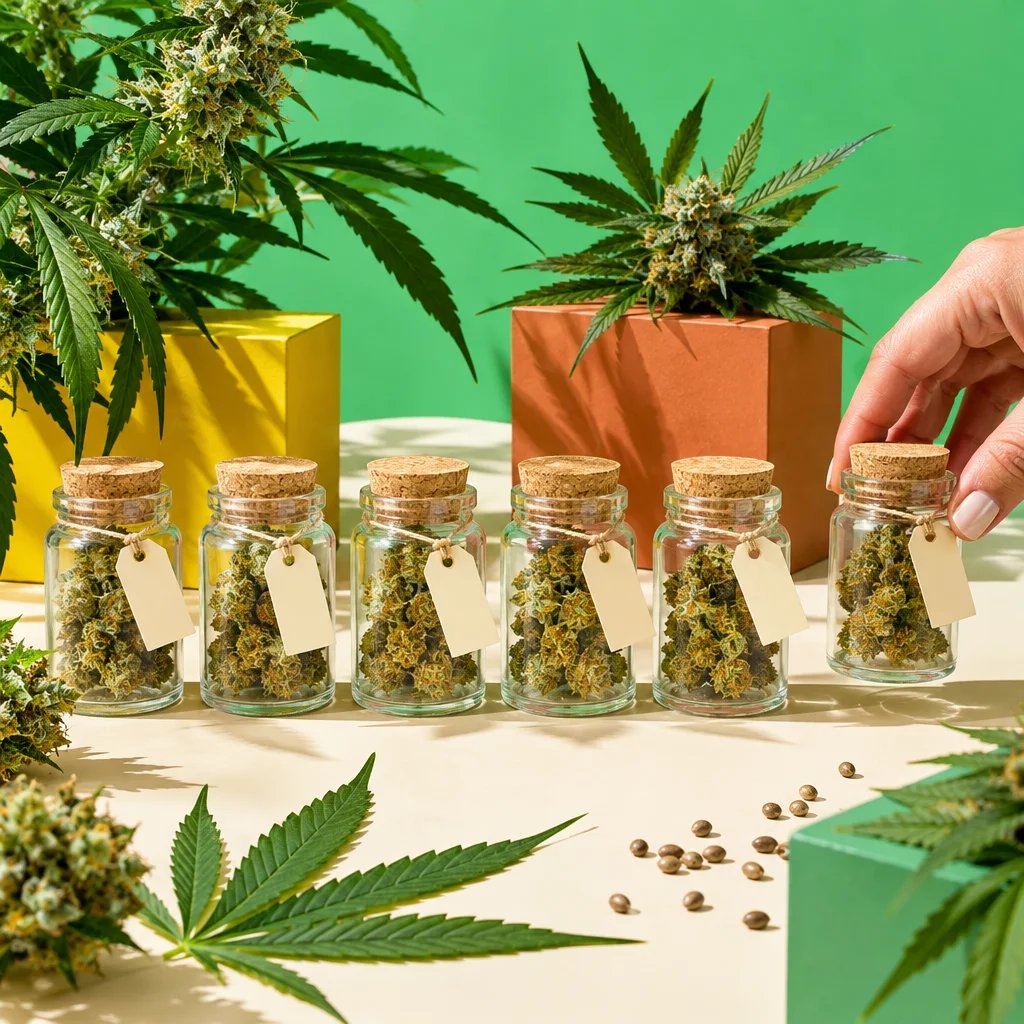
- Dry and cure each plant separately, in its own numbered jar.
- Judge after four weeks of curing.
- Keep the cutting of the winner. Discard the other cuttings.
What to record
| When | What to note |
|---|---|
| Growth phase | Vigor, branching, leaf shape, gap between nodes, smell of the stem when rubbed |
| The stretch | Height at the switch and height two weeks later |
| Flowering | First flowers, resin, smell, any pollen sacs, any mold or pests |
| Harvest | Date, structure and density of the flowers, wet weight |
| After drying | Dry weight, how easy the plant was to trim |
| After the cure | Aroma on opening the jar, flavor, how it burns, effect, how long the aroma lasts |

A simple score from one to five on each trait is enough. What matters is that it is written down at the time. By week ten nobody remembers which plant smelled best in week three.
Deciding what "best" means
Settle this before you start, or the prettiest plant wins by default.
- Flavor and effect first, for most home growers.
- Then the practical traits: flowering time, height, yield, ease of trimming.
- Then resilience: no pollen sacs, no mold, no fuss about feeding.
A plant that scores well in the jar and badly in the tent is still a keeper for many people. A plant that grew pollen sacs is not, however good it smells.
Judging the finished flower
Wait the full four weeks. Fresh from drying, plants taste more alike than they will later.
If you can, judge blind. Have someone move the numbered jars around, or cover the numbers. It is remarkable how often the plant you expected to win does not.
Narrow it to two or three finalists, then return to the notes for the practical traits.
Confirming the winner
One run proves little. A plant can shine because it stood in the best spot. Grow the winner's cuttings again, ideally next to the runner-up's. If it wins a second time, you have a keeper. Until then, keep the cuttings of the top two or three.
Common mistakes
| Mistake | Result |
|---|---|
| No cuttings taken | The best plant is harvested and gone |
| Labels lost or smudged | A jar of excellent flower from an unknown plant |
| Choosing in week three | The most vigorous seedling is rarely the best finished plant |
| Choosing by looks | Color and frost are not flavor |
| Unequal treatment | You selected the best position in the tent |
| Too few seeds | With three plants there is little to choose between |
| Keeping everything | Six mothers nobody has room for. Decide, and discard |
What it costs, and what it gives
A hunt takes a larger pack, a second small space and about five months including the cure. In return you get a plant chosen for your taste and your conditions, which you can grow again for years, and which no seed pack can sell you.
It also changes how you read a seed page. A wide range in a breeder's figures stops being a drawback and becomes the reason to choose that pack.
On Seedsbay
Look for feminized or regular photoperiod seeds, in the larger pack sizes. Compare how breeders describe the variation in their line, and compare price per seed across shops for the 10-pack and above. For a hunt, the number of seeds matters more than the name on the pack.
Frequently asked questions
What is a phenotype?
One individual plant's version of a strain. Seeds from the same pack share parents and still differ, like siblings.
How many seeds do I need?
Ten is a workable minimum. The more plants you grow out, the better the chance of an exceptional one.
Can I pheno hunt with autoflowers?
You can compare them, but you cannot keep the winner. A cutting from an autoflower flowers at once.
Feminized or regular seeds?
Either. Feminized seeds give more candidates per pack. Regular seeds are the choice if you also want males for breeding.
When do I decide?
After the cure, not at harvest. Several of the most important traits can only be judged from the finished flower.
What do I do with the plants I do not keep?
Harvest and enjoy them. Only the cuttings of the plants you reject are discarded.
Next step
Before you order, set up the second small space and decide in writing what "best" means for you. Then choose a pack with variation in it, and number every pot on day one.
Ready to compare prices?
Compare every seed type by price per seed across seedshops.